TLDR; We be indicating that you, the viewer, should consider adding more to what is written; that there’s more than what is written/spoken.
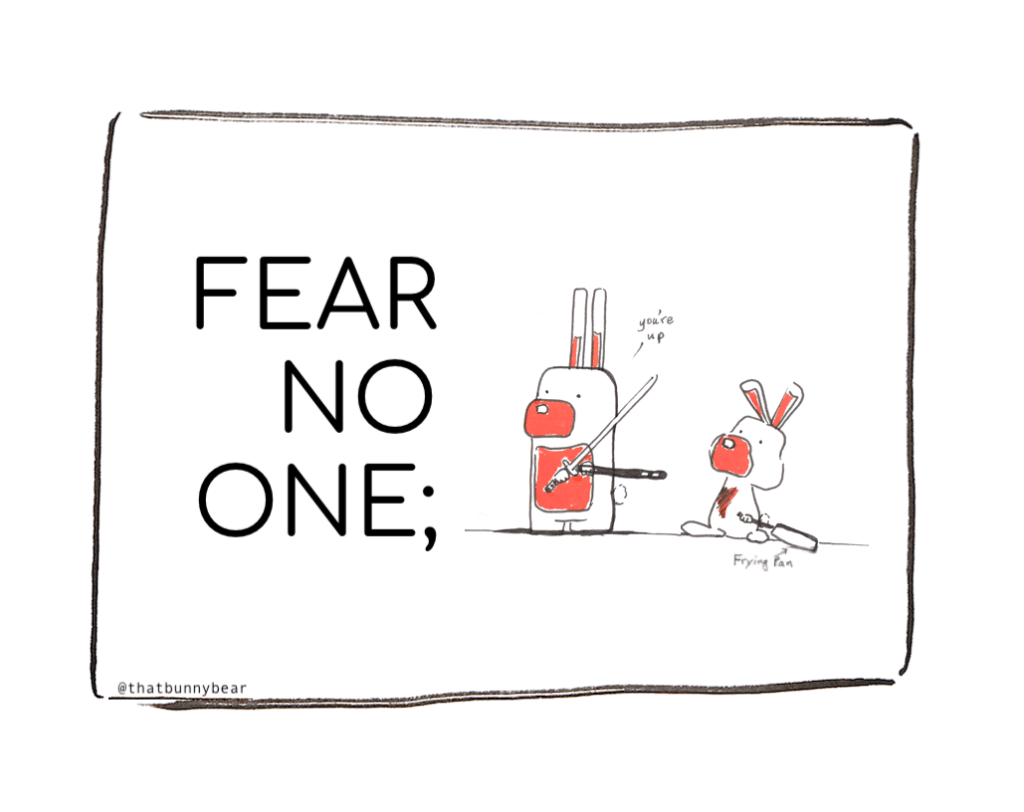
It’s a fascinating stylistic choice that I came up with around 11ish. It’s an “unresolved invitation” to the reader— something I find both original and beautiful. When I google’d how stupid my semi-colon idea actually is, it turns out AI thinks quite highly of my stupid idea that will piss off every linguist on the planet, for sure! Outside of the English majoring community, there’s apparently a morsel of a cultural and linguistic candy floss buried in my schtick.
1. Far-east slangin’
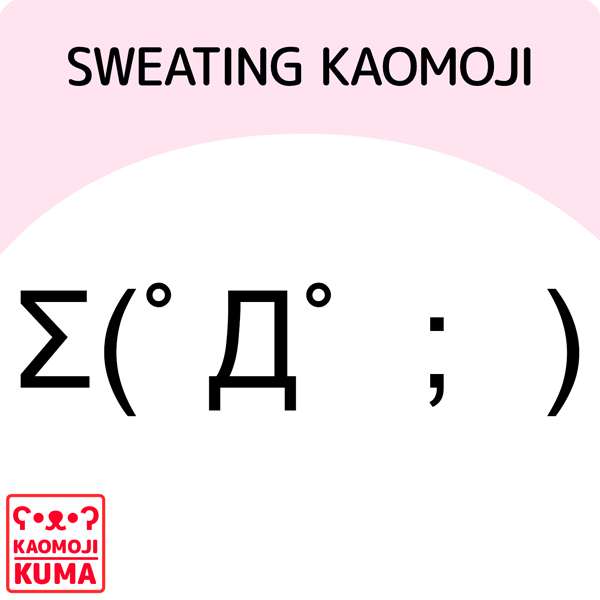
In East Asian digital culture (especially Korean and Japanese internet slang), the semicolon at the end of a sentence often acts as a text-based emoji representing a sweat drop… for awkwardness or uncomfortableness
2. My favorite kind of loop (an open-ended one)
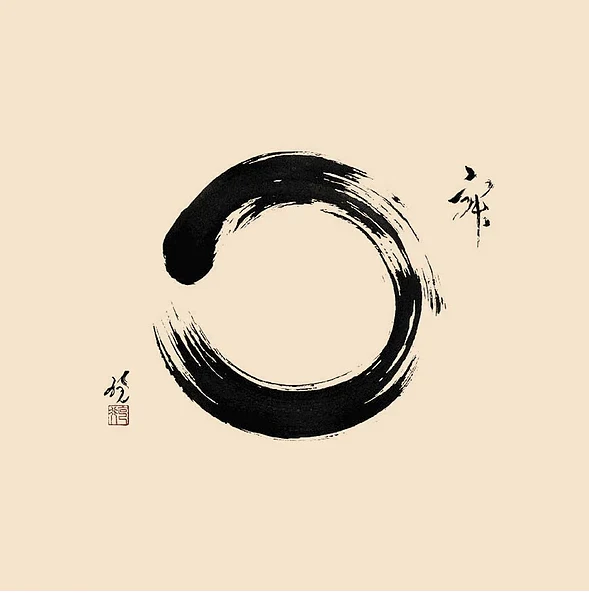
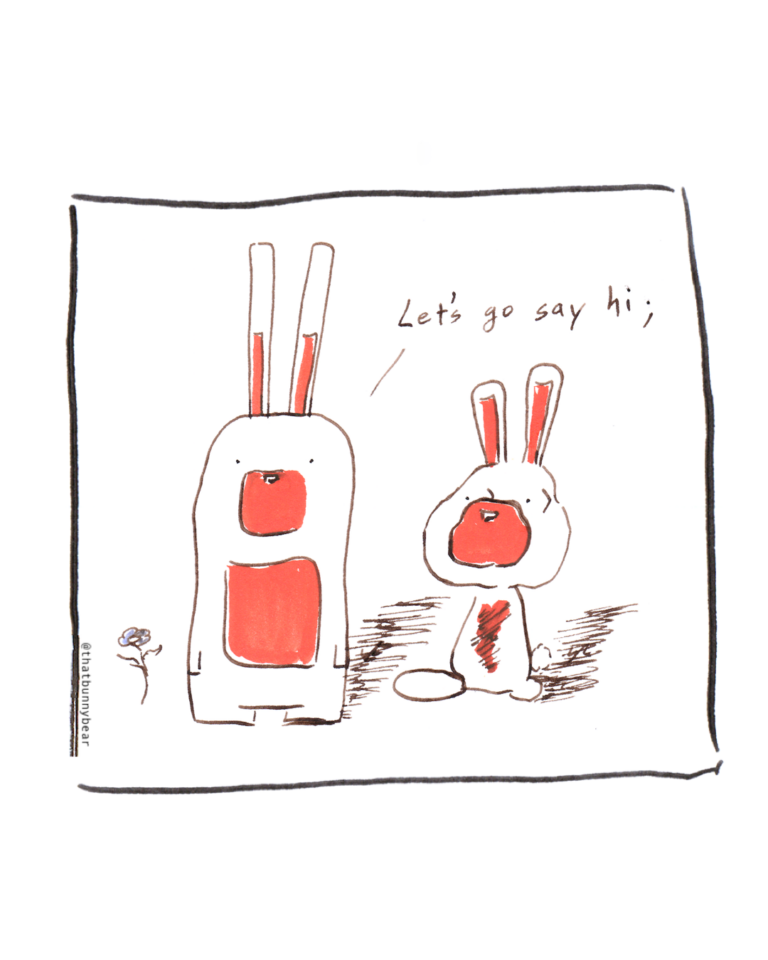
In standard English grammar, a semicolon links two independent clauses that are closely related. By ending a panel on one, the artist is essentially saying:
“Let me point you towards a decent direction; [Your reaction/The universe’s consequence goes here].”
It transforms my comic panels from a static joke into a collaborative thought experiment! How fricking sick is that! I’m attempting to bridge the gap between the character’s intent and the reader’s interpretation of destiny.
In Summary
Using it in my comic panels creates a perfectly uncomfortable pause.
I wanted a clever way to signal that my character’s philosophy is incomplete. That you, the read, needs to connect your own dots to complete that bunny bear experience.
It’s a subtle, witty way to remind us that I don’t get nor want the final word, just the punctuation.
The rest is on you;