When I was young, I didn’t see the world in black and white. While other kids were busy cheering for the hero to defeat the villain, I found myself captivated by both good guys and baddies. It wasn’t that I felt bad and excused their assholery. Contrary, I was fascinated by their origin story of what caused the chaos. Furthermore, bad guys often hide the story of their extraordinary focus and discipline; the drive and the positive attributes that they leveraged for horrific reasons.
The heart of the That Bunny Bear philosophy. To be an optimist isn’t to ignore the Oni in us; you have to see and extract wisdom from every encounter.
The Discipline of the Antagonist
Even the most traditional villains often possess traits we strive for:
- Unwavering Focus: A villain’s commitment to their goal is often more intense than the hero’s. They have a vision and they pursue it without distraction.
- Strategic Thinking: They are long-term thinkers and milestone planners. They think through the “why” and the “how” behind every move.
- Self-Reliance: Often, villains are the ultimate “Ronin”—masterless, independent, and forged through their own struggles.
Learning from the “Ogre”
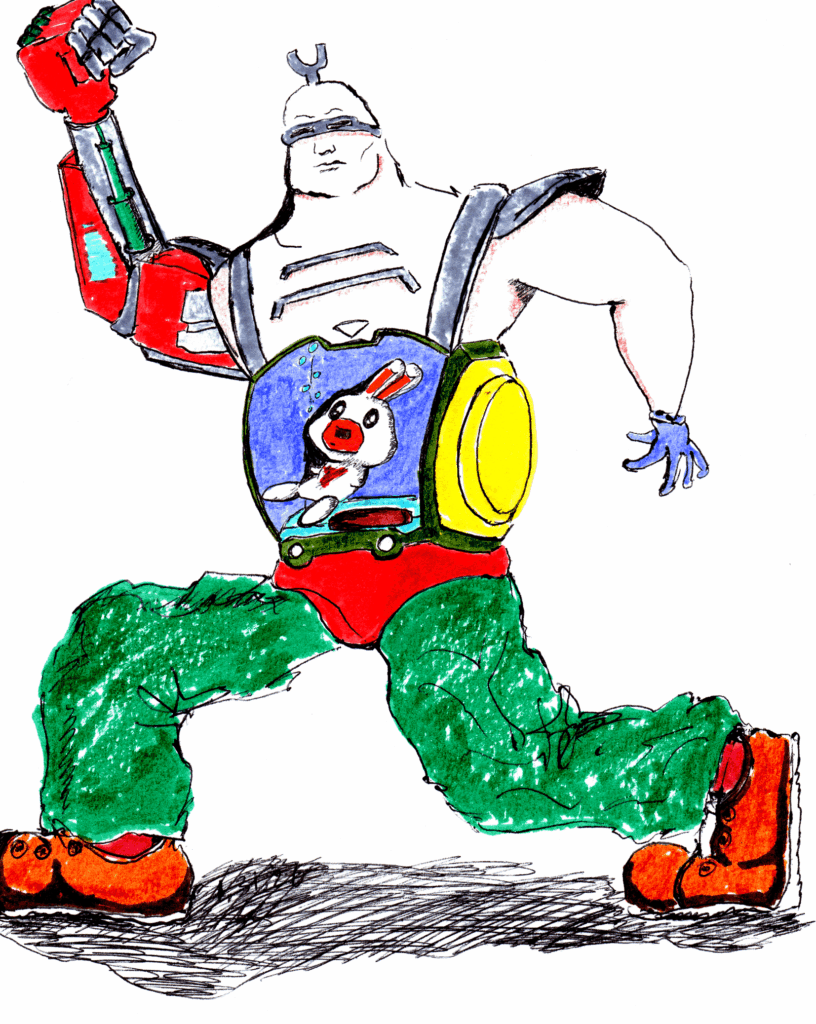
Krang from Teenage Mutant Ninja Turtles is a great example. A complete douchebag in many sense of the word. However, his ability to live forever inside a brain container… how can you NOT wonder what it’d be like to be alive forever, and be able to swap meat suits as needed?
In the story of Momotaro, the Oni are the threat, but they also represent a concentration of power and wealth. If we look at the traits that built that power—rather than the cruelty that abused it—we find lessons in leadership and resilience.
By acknowledging that “bad guys” have good qualities, we gain a strategic advantage. We can adopt their focus and their strength of mind while filtering them through our own moral compass of soft paws and strong minds.
Slicing Life One Lesson at a Time
Being a Ronin amidst carrots means standing in a field of average thoughts and choosing to see the complexity in everything. Life isn’t a simple comic panel; it’s a series of layers. When we find the “good” in the “bad,” we aren’t being naive—we are being functional optimists.